


🟦✨ THE TILE IN PORTUGAL ✨🟦
The tile (azulejo) in Portugal stands as one of the strongest cultural expressions of the country and is undoubtedly one of Portugal’s most original contributions to the world’s artistic heritage.
The uniqueness of this art form is not solely found in the ceramic square tile itself, but in the way these units multiply to create grand decorative compositions.
Portuguese tilework fictionalizes interior spaces, adds light and color vibrations to urban landscapes, and serves as a medium for exuberant decorative imagination. It has been used to depict figurative scenes, following religious and mythological iconographies, narrating historical episodes, illustrating elegant leisure scenes, or simply creating scenic landscapes that expand spatial perception.
The Portuguese preference for large tile compositions reflects an aversion to empty spaces, a trait that may be linked to Arab artistic heritage.
The permanence of tilework in Portuguese culture is undeniable, and any traveler who encounters it across churches, palaces, streets, and homes immediately recognizes its profound significance in Portugal’s artistic and cultural identity.
📖 João Castel-Branco Pereira
Related products
-
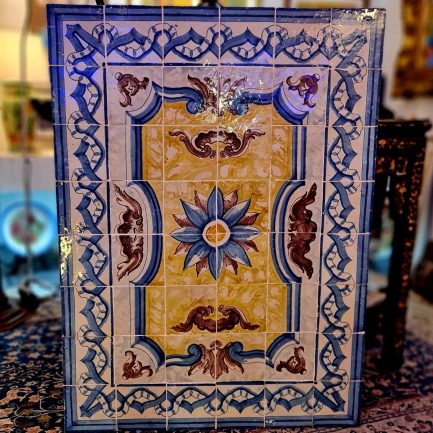
🟦✨ PANEL OF 48 TILES ✨🟦
-
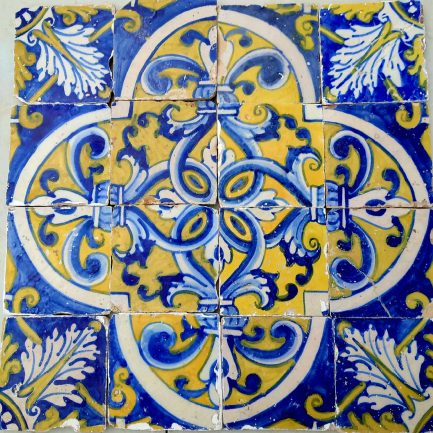
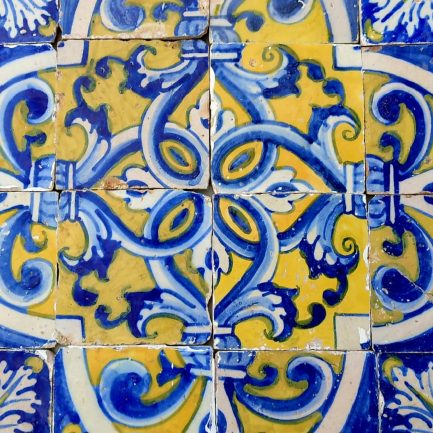
ECHOES OF THE PAST IN BLUE AND YELLOW 🎨✨
-
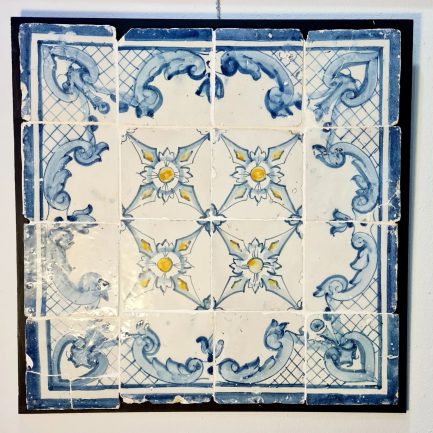
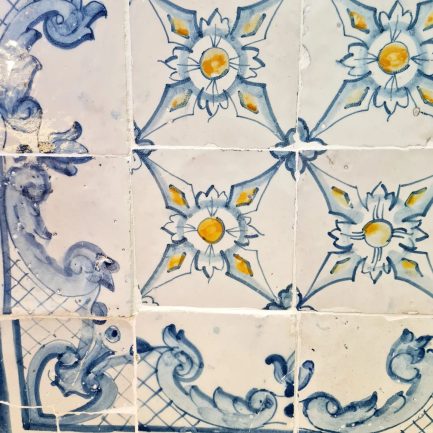
✨ 18TH-CENTURY POMBALINO TILE PANEL ✨
-
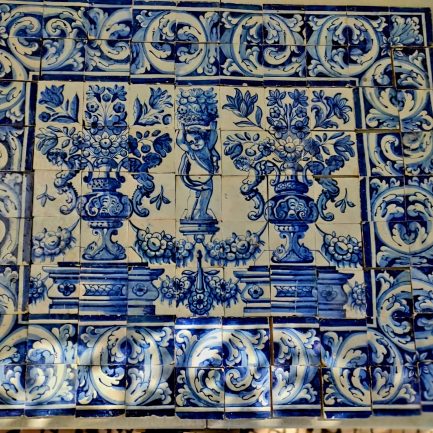
POMBALINE TILE PANEL FROM THE PALÁCIO DE PITEUS
-

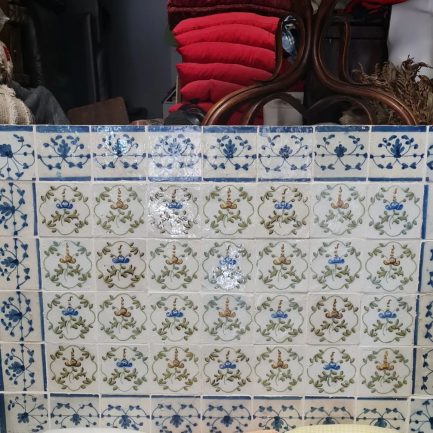
🟦✨ PANEL OF 54 TILES ✨🟦
-
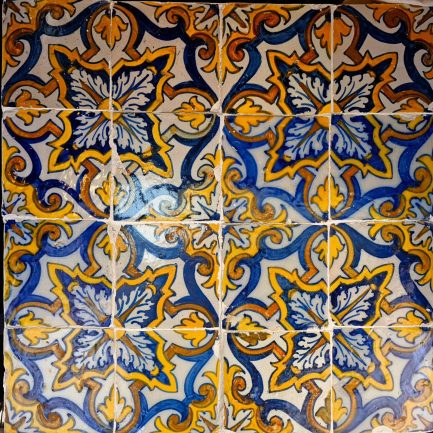
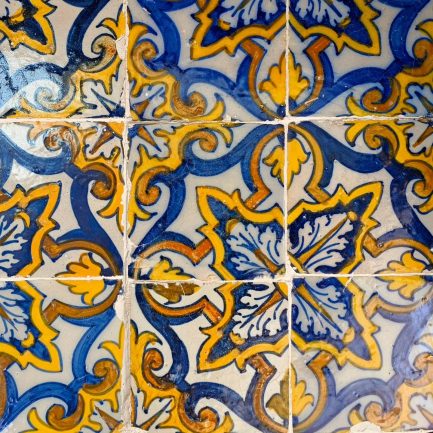
🟦✨ PANEL OF 16 TILES ✨🟦
-
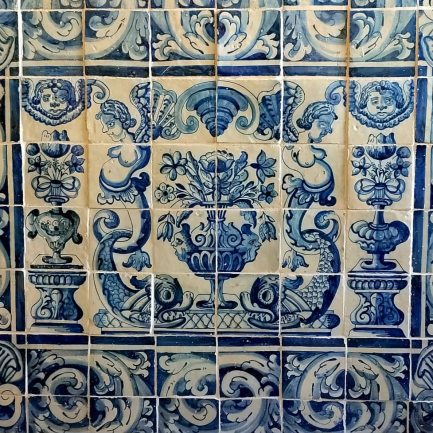
🟦✨ PANEL OF 80 TILES ✨🟦
-
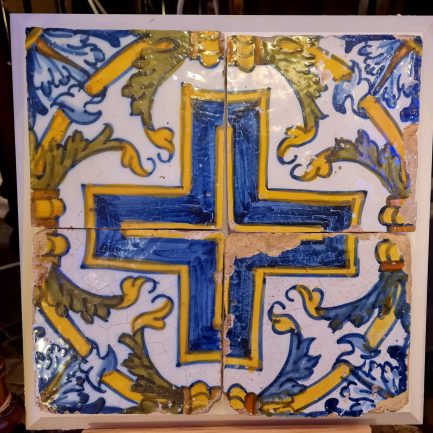
🟦✨ SET OF 4 TILE PANELS ✨🟦
-

🟦✨ PANEL OF 25 TILES ✨🟦
-
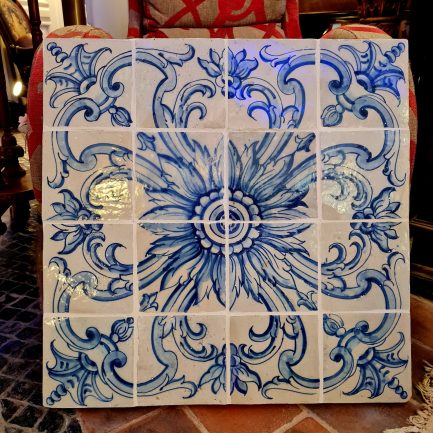
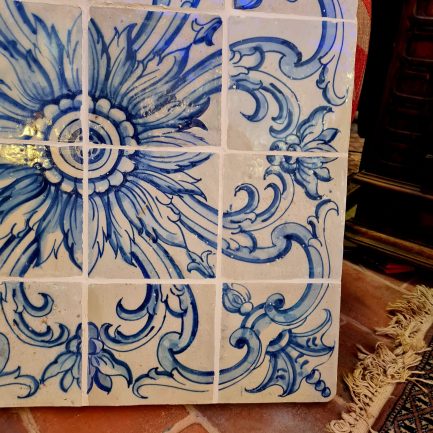
🟦✨ PANEL OF 16 TILES ✨🟦
-
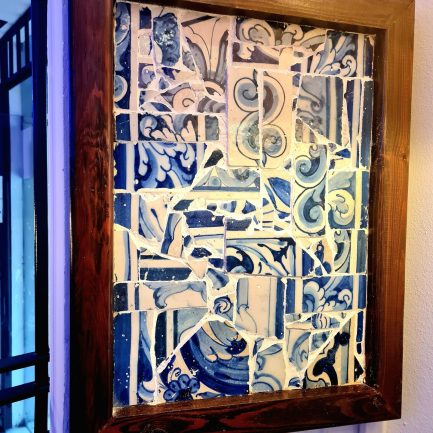
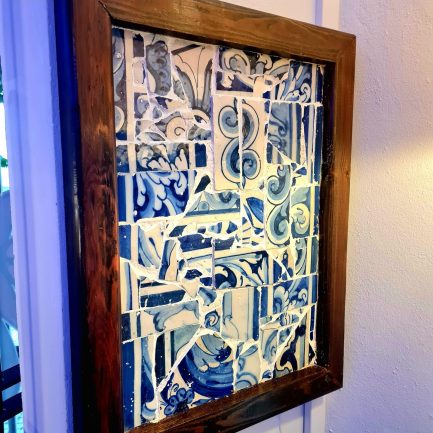
✨ PATCHWORK OF 18TH-CENTURY PORTUGUESE AZULEJOS ✨
